AMRs in Automotive Manufacturing
Optimize Intralogistics with Autonomous, Reliable Material Flow that Accelerates Automotive Production
Modern autonomous mobile robots enhance automotive intralogistics by enabling flexible, reliable material delivery, reducing labor, improving efficiency and stability, and supporting scalable, data-driven production aligned with dynamic manufacturing demands today.
)
In automotive manufacturing, where takt time, throughput, and line-side availability define performance, intralogistics efficiency has become a critical lever. Autonomous mobile robots (AMRs) are redefining internal logistics and lineside replenishment, enabling OEMs and Tier suppliers to stabilize production flows while addressing labor constraints.
Rather than relying on manual milk runs or forklift transport, AMRs execute mission-based delivery of materials, from supermarket and decant areas to point-of-use at the line. Whether supporting Just-in-Time (JIT) or Just-in-Sequence (JIS) delivery, moving WIP between processes, or handling dunnage return, AMRs ensure consistent, traceable flow aligned with production demand.
On the shop floor, this translates into fewer sequence breaks, reduced operator walking distances, and improved OEE. In many plants, operators previously walked several kilometers per shift to support material flow, AMRs redeploy that time toward value-added assembly tasks.
Technically, modern AMRs combine sensor fusion, dynamic routing algorithms, and MES/ERP integration to orchestrate high-frequency transport missions across complex factory layouts. Managed via fleet control systems, they scale from individual routes to full-factory deployments with thousands of missions per day.
For operations leaders, the value is clear:
Increased on-time lineside delivery
Reduced labor hours per unit (HPU) in intralogistics
Improved production stability across shifts
Scalable automation aligned with EV ramp-up and mixed-model production
As automotive plants transition toward flexible, software-defined manufacturing environments, AMRs provide the backbone for resilient, data-driven intralogistics.
Discover how leading manufacturers are deploying AMRs to optimize lineside delivery, JIS sequencing, and WIP movement in our free e-book: Intralogistics Automation in the Automotive Industry.
Download Intralogistics Automation in the Automotive Industry eBook
Trusted by Automotive Manufacturers Worldwide
Mobile Industrial Robots (MiR) AMRs enhance automotive manufacturing by autonomously transporting parts, removing waste, and reliably supplying assembly lines to keep production flowing with greater efficiency and precision.
)
Proven Intralogistics Used Daily Across Automotive Manufacturing Operations – Boost your Workflows with AMRs
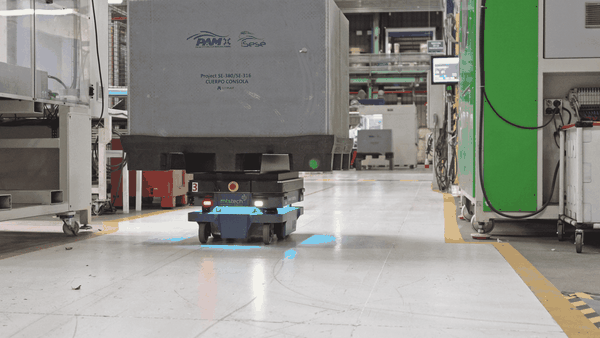
Waste Removal / Disposal
Autonomous removal of scrap and waste materials to support clean, uninterrupted automotive production flows.
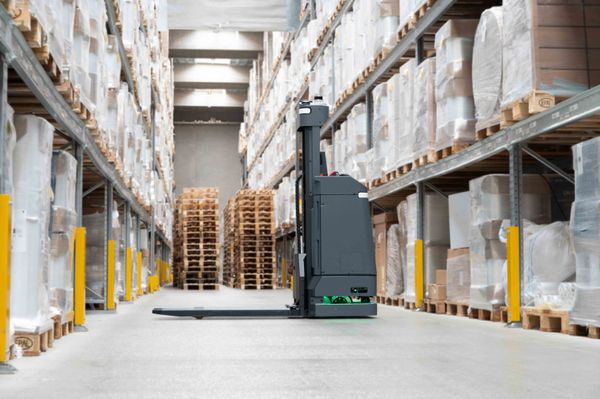
Parts Transportation & Pallet Transport
Enhancing Intralogistics in the automotive Industry with Mobile Industrial Robots AMRs and autonomous pallet movement.
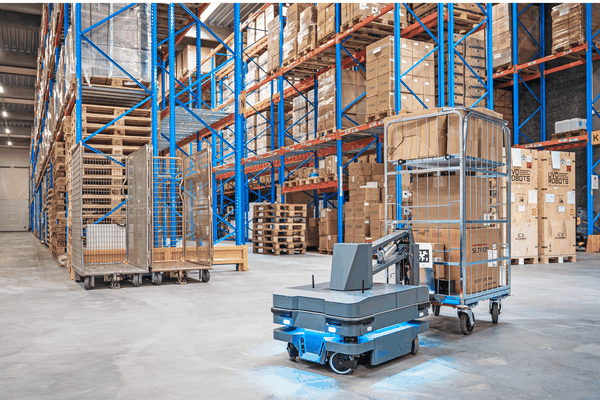
Automated Inbound Logistics & Shipping Dock
Enabling seamless material flow, real-time inventory handling and highly efficient just-in-time production operations.
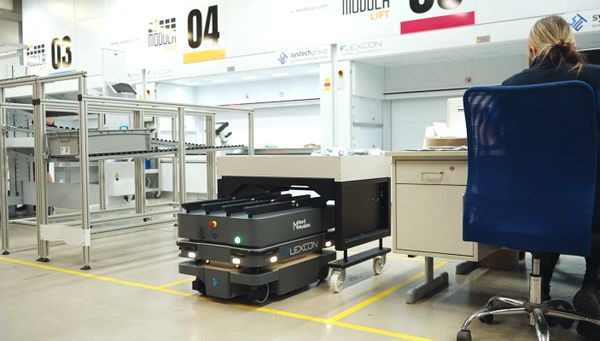
Assembly Line: Raw Materials, Production and Finished Goods
Optimizing the flow of raw materials, streamline production processes and automate the transport of finished goods.
)
)
)
What are the Benefits of Automation in the Automotive Industry?

Increased Efficiency
Automotive manufacturers face rising labor costs, skills shortages, and increasing pressure to maintain safe, high-efficiency operations. Optimizing labor utilization and intralogistics flow has therefore become critical. Autonomous mobile robots (AMRs) take over non-value-added transport tasks such as milk runs, lineside replenishment, and WIP movement, reducing operator walking distances and ergonomic risks. This enables the redeployment of labor to value-adding assembly activities. The result is improved OEE, lower labor hours per unit (HPU), and more stable production, making AMRs a key enabler of scalable, cost- efficient automotive manufacturing.

Flexibility
Tier suppliers are under pressure to handle volatile order volumes and high-mix production without disrupting flow. Traditional solutions like forklifts and AGVs often lack the flexibility required and drive high changeover effort. AMRs provide a more agile alternative, enabling dynamic material transport, lineside delivery, and WIP movement without fixed routes. They deploy quickly, scale easily, and adapt to changing production requirements with minimal downtime. With configurable top modules, AMRs can be tailored to specific workflow, supporting flexible, mixed-model manufacturing and stable intralogistics operations.

Cost-Effective
With rising labor costs and increasing pressure to improve efficiency, automotive manufacturers are prioritizing lean intralogistics and optimized labor utilization. AMRs enable this shift by handling flexible material flow, lineside delivery, and WIP transport, while integrating quickly into existing operations with minimal disruption. Their ability to support multiple workflows makes them a scalable solution for dynamic production environments. The result is improved HPU, higher OEE, and a clear ROI, positioning AMRs as a strategic lever for cost competitiveness and operational resilience.

ROI
Automotive manufacturers are under growing pressure to drive lean operations and reduce labor cost per unit, particularly as wage levels rise and production becomes more complex. AMRs support this shift by enabling flexible intralogistics flows, including lineside delivery and WIP movement, with fast integration and minimal disruption to ongoing operations. Their scalability allows plants to adapt quickly to changing volumes and model mixes. With improvements in safety, OEE, and production agility, AMRs deliver a clear and measurable ROI, making them a key enabler of cost-efficient, resilient manufacturing.
Automotive Manufacturing: Robots Built for Resilient Production
How robots and AMRs scale automotive production and intralogistics — key applications and real case stories for OEMs and Tier suppliers.
)
)
)
Inside Our E-book, You'll Find
Main drivers: understand how robotics supports productivity, flexibility, and resilient operations in automotive manufacturing.
Application overview: explore key workflows—from screwdriving and welding to EV battery assembly and parts transport.
Proven results: discover case stories and real-world applications demonstrating efficiency gains, quality improvements, and ROI.